
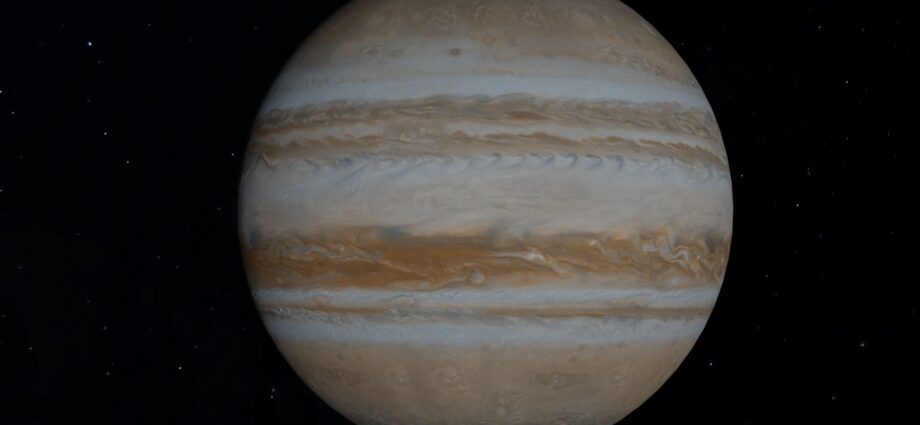
Giant exoplanet discovery has captivated scientists and astronomy enthusiasts alike. This remarkable finding sheds light on the mysteries of distant worlds and their formation.
What is the giant exoplanet discovery?
The recent discovery of a giant exoplanet has captivated astronomers and space enthusiasts alike. This remarkable find was made possible by the advanced capabilities of the James Webb Space Telescope, which illuminated the dark recesses of space, revealing a celestial body previously hidden from view.
This giant exoplanet, located in a distant solar system, boasts characteristics that challenge existing theories of planetary formation and evolution. Its size and composition suggest that it may be a gas giant, similar to Jupiter, which raises questions about how such a massive planet could form so far from its parent star.
Researchers are particularly excited about this discovery for several reasons:
- Advanced Technology: The James Webb Space Telescope’s ability to detect faint signals has opened new avenues in exoplanet research.
- Scientific Insights: Studying this giant exoplanet may offer valuable insights into the dynamics of planetary systems.
- Public Interest: The find has sparked significant interest in space exploration and the search for extraterrestrial life.
As scientists continue to analyze the data, this giant exoplanet discovery could be among the most significant in modern astronomy.
How did the James Webb Space Telescope contribute?
The James Webb Space Telescope (JWST) has played a pivotal role in the recent giant exoplanet discovery, bringing unprecedented clarity and depth to our understanding of distant worlds. Utilizing its advanced infrared capabilities, the telescope can detect faint signals that were previously obscured by starlight. This ability allowed astronomers to observe the exoplanet’s atmosphere and surface conditions in greater detail than ever before.
One of the key contributions of JWST is its ability to analyze the chemical composition of the exoplanet’s atmosphere. By studying the light that filters through the atmosphere as the planet transits its star, scientists can identify specific molecules, such as water vapor and carbon dioxide, which are crucial for understanding potential habitability.
Moreover, the telescope’s precise measurements have helped researchers determine the exoplanet’s size, temperature, and orbit, leading to insights about its formation and evolution. The giant exoplanet discovery not only enhances our knowledge of the universe but also raises questions about the potential for life beyond our solar system.
In essence, the JWST stands as a beacon of innovation in astrophysics, pushing the boundaries of what we know about giant exoplanets and their atmospheres.
Implications of finding a giant exoplanet
The recent giant exoplanet discovery has significant implications for the field of astronomy and our understanding of the universe. As researchers delve deeper into the characteristics of this celestial body, several key areas of interest emerge:
- Planet Formation Theories: This discovery could challenge existing theories on how giant planets form and evolve. The unique attributes of the exoplanet may suggest alternative processes that lead to the creation of such massive worlds.
- Potential for Habitability: Although giant exoplanets are typically inhospitable, studying their atmospheres can offer insights into the conditions surrounding them, including the possibility of orbiting smaller, rocky planets that might host life.
- Stellar Interactions: Understanding the dynamics between this giant exoplanet and its host star could enhance knowledge about planetary systems, including how they influence star formation and evolution.
- Technological Advancements: The methods used to detect and analyze this exoplanet showcase the capabilities of advanced telescopes like the James Webb, paving the way for future discoveries.
Ultimately, the giant exoplanet discovery not only enriches our cosmic knowledge but also sparks curiosity about the many mysteries that remain beyond our reach.
Comparing this discovery to previous exoplanets
The recent giant exoplanet discovery has sparked comparisons to previous significant finds in the field of astronomy. Historically, the identification of exoplanets has transformed our understanding of the universe, but few have generated as much excitement as this latest find.
Notable past discoveries include:
- 51 Pegasi b: The first confirmed exoplanet orbiting a sun-like star, discovered in 1995, which opened the floodgates for exoplanet research.
- HD 209458 b: Known as “Osiris,” it was the first exoplanet observed transiting its star, providing valuable insights into atmospheric composition.
- TRAPPIST-1 System: This system, discovered in 2017, features seven Earth-sized planets, raising questions about the potential for life beyond our solar system.
While each discovery has its significance, the giant exoplanet discovery stands out due to its unique characteristics and the advanced technology used in its observation. As scientists continue to analyze data, this exoplanet may reshape our understanding of planetary formation and diversity, making it a contender for one of the best finds ever.
Future of exoplanet research and exploration
The future of exoplanet research and exploration is poised for significant advancements, especially in light of the recent giant exoplanet discovery. With the capabilities of the James Webb Space Telescope (JWST) and other upcoming technologies, scientists are optimistic about uncovering more about the universe beyond our solar system.
As we continue to refine our observational techniques, the potential to detect and analyze the atmospheres of distant exoplanets becomes increasingly feasible. This could lead to groundbreaking insights regarding their compositions, climates, and even potential habitability.
Future missions are likely to focus on:
- Characterization: Examining the physical and chemical properties of exoplanets, particularly those similar in size to Earth.
- Direct Imaging: Capturing images of exoplanets directly, which can provide insights into their atmospheres and surfaces.
- Transit Method Enhancements: Utilizing advanced techniques to detect smaller planets in the habitable zone of stars.
As we look forward, the giant exoplanet discovery serves as a catalyst for future explorations, potentially reshaping our understanding of planetary systems across the galaxy.
Photo by Zelch Csaba on Pexels
Comments are closed, but trackbacks and pingbacks are open.