
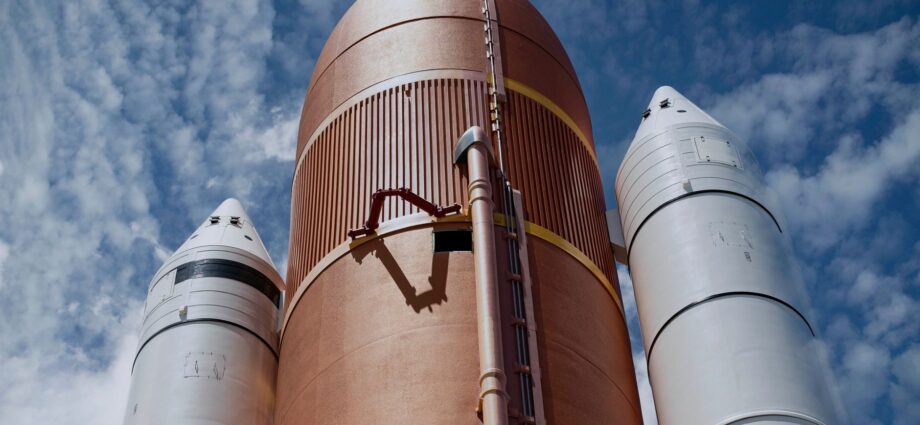
The Vulcan Centaur rocket is set to launch for the first time in 9 months, providing a significant moment for the aerospace community on November 15.
Overview of the Vulcan Centaur rocket
The Vulcan Centaur rocket is a significant advancement in space launch technology, designed to meet the growing demands of both commercial and governmental payloads. Developed by United Launch Alliance (ULA), this rocket represents a new generation of reliable and cost-effective launch vehicles.
The first flight of the Vulcan Centaur is scheduled for November 15, marking a highly anticipated return after a nine-month hiatus. This mission aims to demonstrate the rocket’s capabilities and pave the way for future launches.
Key features of the Vulcan Centaur rocket include:
- Reusable components: The design incorporates elements that can be recovered and reused, significantly reducing the cost per launch.
- Increased payload capacity: The rocket is engineered to carry larger and heavier payloads into various orbits, enhancing its versatility.
- Advanced technology: The Vulcan Centaur utilizes state-of-the-art systems and materials, ensuring reliability and efficiency.
As the aerospace industry evolves, the Vulcan Centaur rocket positions itself as a formidable contender in the quest for a leading launch option, catering to the needs of a diverse array of missions, from satellite deployments to interplanetary explorations.
What to expect during the launch
The upcoming launch of the Vulcan Centaur rocket on November 15 is highly anticipated, as it marks a significant return to action after a nine-month hiatus. During this launch, spectators can expect an impressive showcase of advanced technology and engineering prowess.
As the countdown begins, viewers will witness a series of critical pre-launch checks, ensuring all systems function correctly. The launch is expected to feature:
- Staging events: The Vulcan Centaur will employ innovative staging techniques to maximize efficiency and payload capacity.
- Live telemetry: Real-time data will be transmitted, providing insights into the rocket’s performance throughout its ascent.
- First flight of the BE-4 engines: This launch will utilize Blue Origin’s BE-4 engines, marking a pivotal moment in their operational history.
- Payload deployment: Observers will see the rocket deliver its payload into orbit, highlighting its capabilities as a launch option.
With all eyes on the sky, the Vulcan Centaur rocket’s performance will be closely monitored by industry experts and enthusiasts alike, eager to assess its potential as a leading launch solution in the future.
Historical significance of this launch
The upcoming launch of the Vulcan Centaur rocket on November 15 holds significant historical importance in the realm of space exploration. This marks the first flight of the rocket in nine months, a period during which advancements in technology and engineering have been integrated into its design.
The Vulcan Centaur is not just another rocket; it represents a new era for United Launch Alliance (ULA) as they seek to maintain their competitive edge in an increasingly crowded market. The rocket is designed to replace the aging Atlas V and Delta IV vehicles, which have been the backbone of ULA’s launch services for years.
Additionally, the Vulcan Centaur is set to support a variety of missions, ranging from national security to scientific research, showcasing its versatility. The successful launch will not only validate the innovative features of the rocket but also signify ULA’s commitment to reliability and efficiency in aerospace endeavors.
As the industry eagerly anticipates this launch, it serves as a reminder of the challenges and triumphs that have shaped rocket development. The stakes are high, and the implications of this launch will resonate throughout the aerospace community.
How to watch the Vulcan Centaur launch live
Space enthusiasts and the general public are eagerly awaiting the launch of the Vulcan Centaur rocket, which is set to take place on November 15. This highly anticipated event marks the rocket’s return after a nine-month hiatus, and it promises to be a spectacular sight both on the ground and in the sky.
For those wanting to catch the launch live, there are several options available:
- Official Live Stream: The best way to watch is through the official ULA (United Launch Alliance) website, which will provide a high-quality live stream of the launch.
- Social Media Platforms: ULA will also broadcast the event on popular social media platforms such as YouTube and Facebook, ensuring accessibility for a wider audience.
- Local Viewing Areas: If you’re in the vicinity of Cape Canaveral, Florida, consider visiting designated viewing areas for a firsthand experience of the rocket taking off.
Regardless of how you choose to watch, the launch of the Vulcan Centaur rocket is expected to be a memorable event, showcasing advancements in space technology and exploration.
Technical specifications of the Vulcan Centaur
The Vulcan Centaur rocket is designed with advanced technology to meet the growing demands of space exploration and satellite deployment. Its specifications highlight its capabilities and efficiencies, making it a competitive option for various missions.
- Height: Approximately 60 meters, making it one of the taller rockets in its class.
- Payload Capacity: Can lift over 27,000 kilograms to low Earth orbit, accommodating a wide range of payloads.
- Engines: Equipped with two BE-4 engines, which are designed for high thrust and efficiency, optimized for reusability.
- Stages: The rocket features a two-stage configuration, enhancing its ability to deliver payloads to various orbits.
- Fuel: Utilizes a combination of liquid oxygen and rocket propellant, ensuring a powerful and efficient launch.
- Launch System: The Vulcan Centaur incorporates advanced avionics and guidance systems for precise control during flight.
These technical specifications position the Vulcan Centaur rocket as a promising launch option, especially for missions involving heavy payloads and complex trajectories.
Future missions planned for Vulcan Centaur
The Vulcan Centaur rocket has an ambitious schedule of future missions, aiming to solidify its position as a leading launch option in the aerospace industry. With its advanced capabilities, the rocket is set to support a variety of payloads and customers.
Among the planned missions, the following are particularly noteworthy:
- National Security Payloads: The Vulcan Centaur is expected to launch several critical payloads for the United States Space Force, enhancing national security efforts in space.
- Commercial Satellites: Several commercial customers have lined up for launches, showcasing the rocket’s versatility in deploying satellites for telecommunications, Earth observation, and scientific research.
- Interplanetary Missions: Future missions may include launches intended for interplanetary exploration, expanding the potential for discoveries beyond Earth.
- Space Science Missions: The Vulcan Centaur is also slated to carry payloads for various scientific missions, contributing to our understanding of the universe.
With such a diverse range of upcoming projects, the Vulcan Centaur rocket is poised to meet the evolving demands of both government and commercial sectors, reinforcing its status as a premier launch vehicle.
Expert opinions on the rocket’s capabilities
Experts in the aerospace industry have weighed in on the capabilities of the Vulcan Centaur rocket, highlighting its potential to revolutionize space launches. According to Dr. Emily Carter, a prominent aerospace engineer, the Vulcan Centaur’s design optimizes both efficiency and reliability. She states, “With its advanced propulsion system and innovative payload capacity, the Vulcan Centaur rocket is poised to set new standards in the launch market.”
Additionally, industry analyst Mark Thompson emphasizes the rocket’s versatility. “The ability to carry a variety of payloads, from small satellites to larger missions, makes the Vulcan Centaur an attractive option for both commercial and government sectors,” he notes. This adaptability could potentially position the Vulcan Centaur as a leading choice for future space endeavors.
Moreover, Dr. Sarah Nguyen highlights the importance of this launch in the context of sustainability. “The Vulcan Centaur rocket incorporates eco-friendly technologies that align with the growing demand for greener space exploration,” she explains. Such advancements not only enhance performance but also contribute to reducing the environmental impact of space activities.
Overall, the consensus among experts is clear: the Vulcan Centaur rocket represents a significant leap forward in launch technology.
Photo by john mckenna on Pexels
Comments are closed, but trackbacks and pingbacks are open.